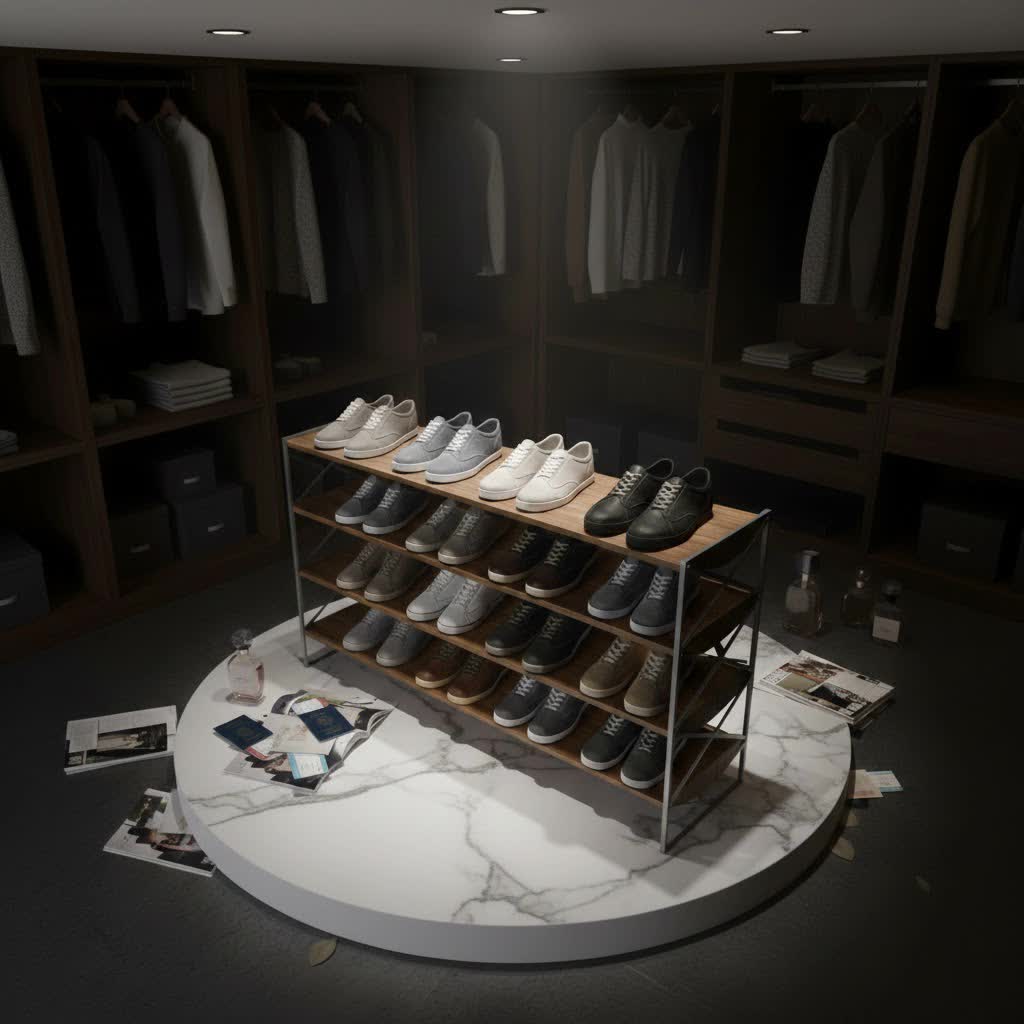
Are you tired of cluttered entryways, overflowing closets, and the endless search for a matching pair of shoes? In today’s homes, where every square inch counts, innovative storage solutions are more crucial than ever. A spinning shoe rack isn’t just a place to stash your footwear; it’s a game-changer for organization, aesthetics, and convenience. As someone with over a decade of experience in furniture and storage solutions, I’ve seen firsthand how the right shoe rack can transform a living space. This guide will walk you through everything you need to know to choose the perfect spinning shoe rack that complements your home and lifestyle.
Popular Types of Spinning Shoe Racks
Spinning shoe racks come in various designs, each offering unique advantages for different spaces and shoe collections. Understanding these types will help you narrow down the best fit for your needs.
Vertical Tower Spinning Racks
Vertical tower spinning racks are the most common style, featuring multiple circular or polygonal shelves stacked on a central pole. The entire unit rotates 360 degrees, providing easy access to all your shoes.
- Advantages: High storage capacity in a compact footprint, ideal for small spaces like closets or entryways, and offers full 360-degree access.
- Disadvantages: Can be top-heavy when fully loaded and may require wall anchoring for enhanced stability, especially if you have children or pets.
- Best Suited For: Individuals or families with a significant shoe collection looking to maximize vertical storage in tight areas.
Tiered Lazy Susan-Style Units
These are typically smaller, lower-profile versions resembling kitchen Lazy Susans. They are often placed inside cabinets, under benches, or on shelves to organize a smaller collection of shoes.
- Advantages: Extremely space-efficient for very tight areas, ideal for organizing a few frequently worn pairs, and generally child-friendly due to their lower height.
- Disadvantages: Limited storage capacity (typically holding 6-12 pairs) and not suitable for tall boots or high heels.
- Best Suited For: Small apartments, mudrooms, or supplemental shoe storage within larger cabinets.
Double-Sided Rotating Wall-Mounted Racks
These less common types are fixed to a wall with two rotating arms extending outward, allowing access from both sides. They offer a unique approach to saving floor space.
- Advantages: Saves valuable floor space by utilizing wall space and can be an excellent solution for shared closets where accessibility from different angles is beneficial.
- Disadvantages: Requires robust wall mounting, and their availability in the market can be more limited compared to freestanding units.
- Best Suited For: Custom closet systems or specific architectural layouts where floor space is extremely limited.
Motorized Revolving Racks
|
Our Picks for the Best Shoe Rack in 2026
As an Amazon Associate I earn from qualifying purchases.
|
||
| Num | Product | Action |
|---|---|---|
| 1 | 3 Tier Shoe Rack for Closet, Shoe Organizer with 5 Hooks, Long Shoe Shelf Storage for Sneaker and Boot Stackable Free Standing Shoe Rack for Entryway, Garage, Small Spaces, Dorm |

|
| 2 | ROJASOP Shoe Rack Organizer, 8-Tier Metal Shoe Rack for Closet Entryway Garage, 26-32 Pairs Tall Shoe Boot Storage Shelf with 15 Hooks, Stackable Large Shoe Stand |
|
| 3 | 3 Tier Bamboo Shoe Rack for Closet Free Standing Wood Shoe Shelf Storage Organizer for Entryway Small Space Stackable 27"x11"x20" (Natural) |
|
| 4 | 8 Tier Shoe Rack, Shoe Storage Organizer, Large Capacity Shoe Shelf Holds 32 Pairs of Shoes, Sturdy and Stable, for Entryway, Hallway, Closet, Dorm Room, Rustic Brown SS08BR |
|
| 5 | SpaceAid 7 Tier Rotating Shoe Rack Tower, Spinning Shoe Display Lazy Susan, Revolving 360 Shoe Rack Storage Round Carousel, Vertical Handbag Rotate Shoes Closet Organization (7-Tier White) |
|
| 6 | RONGJlA 3 Tier Bamboo Shoe Rack for Closet Free Standing Wood Shoe Shelf Storage Organizer for Entryway Small Space Stackable, Natural |
|
| 7 | FIDUCIAL HOME 10 Tiers Shoe Rack 20-25 Pairs Sturdy Shoe Shelf |
|
| 8 | HOOBRO Shoe Rack for Entryway, 5-Tier Shoe Organizer with Adjustable Mesh Shelves, 16-20 Pairs of Shoes, Spacious Floor Mount, Metal, Industrial, Shoe Shelf for Closet, Rustic Brown BF12XJ01 |
|
| 9 | VTRIN 10 Tier Shoe Rack Tall Large Capacity 50 Pair Wide Shoe Organizer with Two Hooks Sturdy Metal Shoe Shelf for Entryway, Closet, Bedroom |
|
| 10 | SONGMICS Shoe Rack Bench, 3-Tier Bamboo Shoe Storage Organizer, Entryway Bench, Holds Up to 286 lb, 11.3 x 27.6 x 17.8 Inches, for Entryway Bathroom Bedroom, Ink Black ULBS04H |
|
For those seeking a touch of luxury and convenience, motorized revolving racks offer automatic rotation via a button or sensor. These are premium models designed for a high-end experience.
- Advantages: Provides hands-free operation and a futuristic design, making shoe selection effortless and adding a sophisticated element to your space.
- Disadvantages: Significantly more expensive, requires a power source, and may involve higher maintenance risks compared to manual models.
- Best Suited For: Luxury closets, boutique-style displays, or homeowners prioritizing cutting-edge technology and ultimate convenience.
Materials Used in Spinning Shoe Racks
The material of your spinning shoe rack greatly influences its durability, aesthetics, and maintenance requirements. Let’s explore the common materials you’ll find.
Wood Spinning Shoe Racks
Wood offers a classic and warm aesthetic, blending well with various interior styles.
- Advantages: Elegant and natural appearance, can be very durable (especially solid wood), and offers a premium feel. Options like bamboo are eco-friendly.
- Disadvantages: Can be susceptible to moisture and warping if not properly treated or maintained. Higher price point, especially for solid wood or custom pieces. MDF (Medium Density Fiberboard) is a common engineered wood option, offering stability but less moisture resistance than solid wood.
- Suits Best: Traditional, rustic, or minimalist interiors where aesthetics are a priority, and you’re looking for a long-lasting piece.
Metal Spinning Shoe Racks
Metal racks are known for their strength and modern appeal, often featuring sleek lines.
- Advantages: Extremely sturdy and durable, excellent weight capacity, easy to clean, and resistant to pests like termites. Aluminum alloy and steel are common choices.
- Disadvantages: Can be prone to rust if not properly coated (look for powder-coated or rust-resistant finishes), and may appear less “warm” than wood.
- Suits Best: Contemporary, industrial, or minimalist décors, and for storing heavier footwear like boots and chunky sneakers.
Plastic Spinning Shoe Racks
Plastic options are typically more budget-friendly and offer a range of colors.
- Advantages: Lightweight, affordable, easy to move, and often available in a wide array of colors. Some models use PVC wood-plastic board for improved durability.
- Disadvantages: Generally less durable than wood or metal, prone to bending or warping under heavy loads, and may become brittle or discolored over time with exposure to sunlight or frequent use. Less stable when fully loaded.
- Suits Best: Temporary solutions, children’s rooms, or for those on a tight budget who need a simple, lightweight option.
Fabric Spinning Shoe Racks
Fabric racks are characterized by their flexibility and lightweight nature, often featuring canvas or non-woven materials over a frame.
- Advantages: Very lightweight, easy to assemble and disassemble, portable, and often the most affordable option.
- Disadvantages: Low durability and weight capacity, difficult to clean thoroughly, and less aesthetic appeal for formal spaces.
- Suits Best: Small, temporary storage needs, dorm rooms, or for seasonal shoe storage in less visible areas.
Choosing the Perfect Spinning Shoe Rack (Buying Guide)
Selecting the right spinning shoe rack involves balancing your personal needs with the rack’s features and your home’s aesthetic.
Assess Your Usage Needs
Start by understanding your specific requirements.
- Number of Shoes: How many pairs do you need to store? Spinning racks can hold anywhere from 12 to 52 pairs, depending on the number of tiers and design. A 7-tier rack can typically hold around 42 pairs.
- Available Space: Measure the area where you plan to place the rack. Spinning racks are vertical, saving floor space, but you need to ensure adequate clearance for rotation, especially for wider base diameters.
- Interior Style: Does your home lean modern, traditional, industrial, or minimalist? Choose a material and finish that harmonizes with your existing decor.
Material Quality Matters
The material choice impacts longevity and stability.
- For Wood: Opt for solid wood or high-quality engineered wood that has been treated for moisture and pest resistance.
- For Metal: Look for steel or aluminum frames with powder-coating or rust-resistant finishes for enhanced durability. Ensure joints are sturdy.
- For Plastic: If choosing plastic, select higher-grade, thicker plastics or composite materials like PVC wood-plastic board for better load-bearing and stability.
Size and Design Considerations
Beyond materials, the rack’s physical attributes are crucial for functionality.
- Dimensions: Ensure the height and diameter fit your designated space. Tall vertical designs maximize storage, while a wider base diameter generally improves stability.
- Adjustable Shelves: Look for racks with adjustable shelf heights to accommodate various shoe types, from flats and sneakers to high heels and tall boots. Standard shelf spacing is usually 6-8 inches, but flexibility is a plus.
- Ventilation: A good design will allow for adequate airflow to prevent odors and moisture buildup. Open-tier designs are generally better for this.
- Rotation Mechanism: Test for smooth, quiet 360-degree rotation. Ball-bearing swivel bases typically offer a superior experience compared to basic pivot joints. Avoid units that wobble or stick.
- Weight Capacity: Check the manufacturer’s specifications. A sturdy rack should support at least 35-50 lbs per shelf, or 80-100 lbs total, evenly distributed.
- Assembly: Most spinning shoe racks require some assembly. Look for clear instructions and included tools. Some high-end custom options might come fully assembled.
Brand Reputation and Price
Investing in a reputable brand often correlates with better quality and customer support.
- Reputation: Research brands known for their durable and well-designed storage solutions. Read reviews from other buyers for real-world feedback on performance and longevity.
- Cost-Benefit Analysis: While cheaper options exist, consider the long-term value. A slightly higher investment in a quality rack can save you from frequent replacements. Compare prices across different retailers to find a balance between cost and quality.
Tips for Organizing and Maintaining Your Spinning Shoe Rack
To ensure your spinning shoe rack serves you well for years, proper organization and regular maintenance are key.
Smart Organization
Maximize efficiency and keep your shoes in prime condition.
- Categorize Your Footwear: Organize shoes by type (casual, formal, athletic), color, or frequency of use. This makes finding what you need incredibly quick.
- Utilize Vertical Space: Place frequently used shoes at easily accessible levels. For lesser-worn or seasonal items, consider higher or lower tiers.
- Consider Shoe Organizers: For delicate shoes or to prevent dust, use clear shoe boxes or dividers on the rack. For bulky items, consider storing them elsewhere if the spinning rack struggles with stability.
- Heel-to-Toe Placement: For maximum capacity, especially on smaller tiers, place shoes heel-to-toe in alternating directions.
Regular Cleaning and Care
Maintaining cleanliness extends the life of both your rack and your shoes.
- Wipe Down Regularly: Dust and dirt can accumulate quickly. Use a damp cloth to wipe down shelves and the central column regularly. For metal racks, ensure they are dry to prevent rust.
- Address Spills Promptly: Clean any spills immediately, especially on wood or MDF, to prevent staining or damage.
- Use Appropriate Cleaners: For wooden racks, use wood-safe cleaners. For metal and plastic, a mild detergent and water usually suffice.
- Clean Shoes Before Storing: Always wipe mud or dirt off your shoes before placing them on the rack to keep the unit clean and prevent the spread of grime.
Longevity and Stability
A few habits can help your rack remain sturdy and functional.
- Distribute Weight Evenly: Avoid overloading one side of the rack, as this can affect stability and the smoothness of the spinning mechanism. Rotate your shoe collection to ensure even weight distribution.
- Check for Tightness: Periodically inspect screws and connections, tightening them if they become loose to prevent wobbling or structural issues.
- Lubricate Moving Parts: For metal rotation mechanisms, a light application of lubricant (as per manufacturer guidelines) can help maintain a smooth spin over time.
“A well-chosen spinning shoe rack isn’t just about utility; it’s about reclaiming space, simplifying your routine, and elevating the overall organization and aesthetic of your home.”
Conclusion
Choosing the right spinning shoe rack is a smart investment for any homeowner looking to streamline their space and keep their footwear collection organized. By considering factors like the type of rack, material, size, and your personal storage needs, you can find a solution that not only declutters your home but also adds a touch of modern elegance. Remember to prioritize stability, ease of access, and durability to ensure your chosen rack serves you effectively for years to come.
Ready to transform your shoe storage? With the insights shared here, you’re well-equipped to select a spinning shoe rack that perfectly aligns with your vision for a tidy and stylish home. What kind of footwear collection are you most excited to organize with your new spinning rack?
Frequently Asked Questions
Which type of spinning shoe rack is best for a small apartment?
For a small apartment, a vertical tower spinning rack is often the most suitable choice. Its tall, narrow design maximizes vertical space, allowing you to store numerous pairs of shoes in a minimal footprint, typically fitting well into closets or compact entryways without obstructing walkways.
Can spinning shoe racks accommodate all shoe sizes, including boots?
Many spinning shoe racks, particularly vertical tower designs, offer adjustable shelves that can accommodate various shoe sizes, including ankle boots and some taller styles. However, for very bulky or knee-high boots, you should verify the shelf height and weight capacity to ensure a proper fit and stability.
Are spinning shoe racks difficult to assemble?
The ease of assembly varies by model and manufacturer. Many modern spinning shoe racks are designed for straightforward assembly, often featuring interlocking parts and clear instructions that don’t require specialized tools. However, some larger or more complex units may take more time and effort.
How do I prevent a spinning shoe rack from wobbling?
To prevent wobbling, ensure the rack is assembled correctly, all fasteners are tightened, and the weight of your shoes is distributed evenly across the tiers. Placing heavier shoes on the bottom tiers can also improve stability. Some vertical tower models may come with anti-tipping devices or recommendations for wall anchoring.
What is the average capacity of a spinning shoe rack?
The capacity of a spinning shoe rack typically ranges from 12 to over 50 pairs of shoes, depending on the number of tiers and the specific design. A common 7-tier vertical spinning rack can often hold around 28-42 pairs, making it a highly efficient storage solution for diverse collections.
Get our weekly buyer guide
Practical specs, not advice. Unsubscribe anytime.
