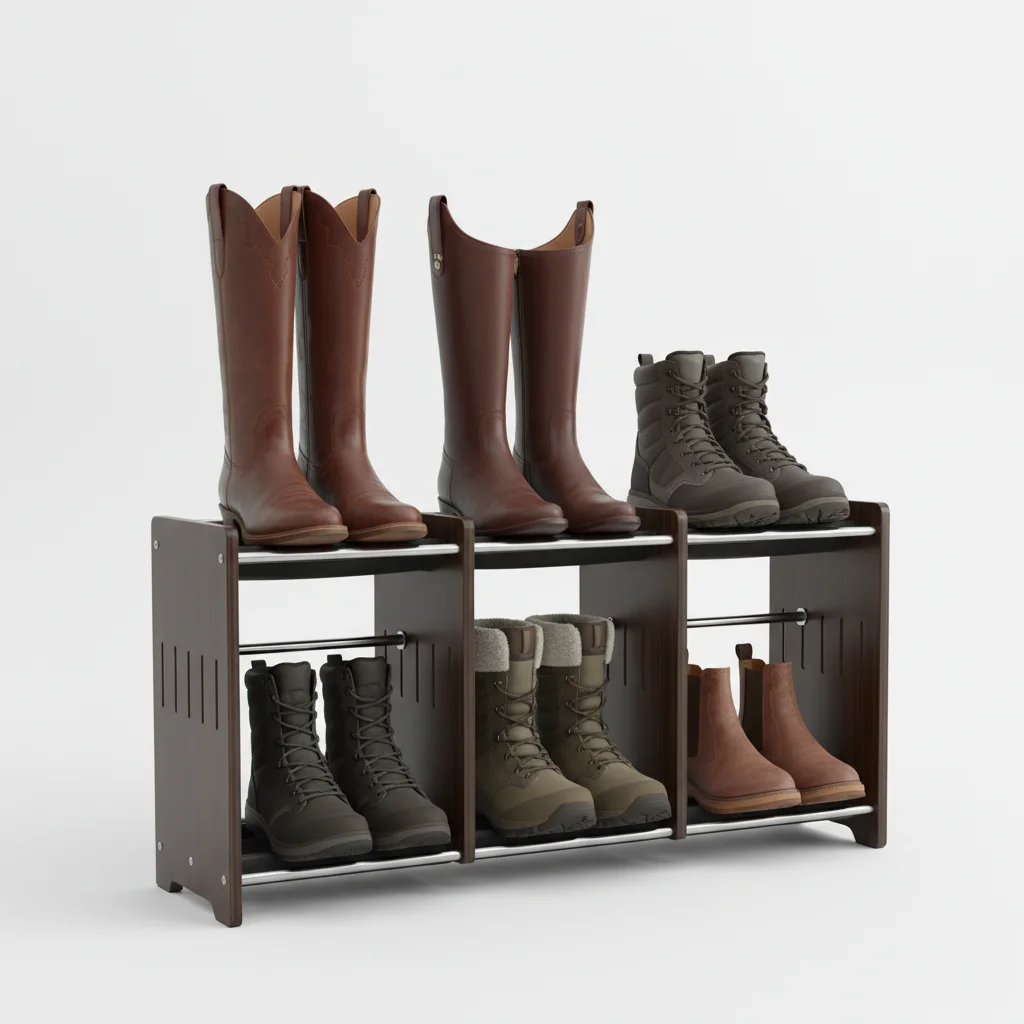
Finding the right shoe rack for boots can be a challenge, as their unique size and shape often require specialized storage solutions. To keep your footwear organized and in pristine condition, there are five primary types of shoe racks specifically designed to accommodate boots. These options range from vertical designs that maximize closet space to open-air solutions that promote proper drying and prevent mildew.
Understanding Boot Storage Needs
Boots, unlike standard shoes, demand more vertical clearance and often have wider shafts. Improper storage can lead to creasing, loss of shape, and even damage to the material. A dedicated shoe rack for boots addresses these issues by providing adequate space and support, ensuring your investment in quality footwear is protected. Consider the height of your tallest boots and the number of pairs you need to store before selecting a rack. For home organization buying guides on this site.
Vertical Boot Racks: Maximizing Closet Space
Vertical boot racks are an excellent choice for those with limited floor space, particularly within closets. These racks typically feature multiple tiers with ample height between shelves, allowing boots to stand upright without crushing. Some designs include adjustable shelves, offering flexibility for different boot heights, from ankle boots to knee-high styles. They are often made from durable materials like metal or sturdy plastic, providing stable support for heavier boots.
Open-Air Boot Organizers: Promoting Airflow
Open-air boot organizers are ideal for entryways or mudrooms where boots might be wet or muddy. These racks, often made from slatted wood or wire mesh, allow for maximum airflow, which helps boots dry naturally and prevents the buildup of odors and mildew. While they may take up more horizontal space, the benefit of proper ventilation is significant for maintaining boot longevity and hygiene. Some models include drip trays to catch water and dirt, keeping your floors clean.
Boot Trees and Shapers: Maintaining Form
|
Our Picks for the Best Shoe Rack in 2026
As an Amazon Associate I earn from qualifying purchases.
|
||
| Num | Product | Action |
|---|---|---|
| 1 | SONGMICS Shoe Rack Bench, 3-Tier Bamboo Shoe Storage Organizer, Entryway Bench, Holds Up to 286 lb, 11.3 x 27.6 x 17.8 Inches, for Entryway Bathroom Bedroom, Ink Black ULBS04H |

|
| 2 | RONGJlA 3 Tier Bamboo Shoe Rack for Closet Free Standing Wood Shoe Shelf Storage Organizer for Entryway Small Space Stackable, Natural |
|
| 3 | ROJASOP Shoe Rack Organizer, 8-Tier Metal Shoe Rack for Closet Entryway Garage, 26-32 Pairs Tall Shoe Boot Storage Shelf with 15 Hooks, Stackable Large Shoe Stand |
|
| 4 | 3 Tier Bamboo Shoe Rack for Closet Free Standing Wood Shoe Shelf Storage Organizer for Entryway Small Space Stackable 27"x11"x20" (Natural) |
|
| 5 | FIDUCIAL HOME 10 Tiers Shoe Rack 20-25 Pairs Sturdy Shoe Shelf |
|
| 6 | SpaceAid 7 Tier Rotating Shoe Rack Tower, Spinning Shoe Display Lazy Susan, Revolving 360 Shoe Rack Storage Round Carousel, Vertical Handbag Rotate Shoes Closet Organization (7-Tier White) |
|
| 7 | VTRIN 10 Tier Shoe Rack Tall Large Capacity 50 Pair Wide Shoe Organizer with Two Hooks Sturdy Metal Shoe Shelf for Entryway, Closet, Bedroom |
|
| 8 | 8 Tier Shoe Rack, Shoe Storage Organizer, Large Capacity Shoe Shelf Holds 32 Pairs of Shoes, Sturdy and Stable, for Entryway, Hallway, Closet, Dorm Room, Rustic Brown SS08BR |
|
| 9 | HOOBRO Shoe Rack for Entryway, 5-Tier Shoe Organizer with Adjustable Mesh Shelves, 16-20 Pairs of Shoes, Spacious Floor Mount, Metal, Industrial, Shoe Shelf for Closet, Rustic Brown BF12XJ01 |
|
| 10 | 3 Tier Shoe Rack for Closet, Shoe Organizer with 5 Hooks, Long Shoe Shelf Storage for Sneaker and Boot Stackable Free Standing Shoe Rack for Entryway, Garage, Small Spaces, Dorm |
|
While not a rack in the traditional sense, boot trees and shapers are crucial accessories for maintaining the form of your boots, especially when stored on a rack. These inserts, made from plastic, cedar, or inflatable materials, prevent shafts from collapsing and creasing. Using boot trees in conjunction with a suitable shoe rack for boots ensures your footwear retains its original shape and appearance, extending its lifespan. Cedar boot trees also offer the added benefit of absorbing moisture and odors.
- Tall boot racks with adjustable shelves
- Slatted wood or wire mesh open-air designs
- Over-the-door boot hangers for vertical storage
- Modular boot cubes for customizable configurations
- Bench-style boot racks with integrated seating
Bench-Style Boot Racks: Functionality and Seating
Bench-style boot racks offer a dual purpose: storage for your boots and a convenient place to sit while putting them on or taking them off. These robust units are often found in entryways and mudrooms, providing a practical solution for busy households. They typically feature open compartments or cubbies underneath the seating area, perfectly sized for boots. Materials range from solid wood to metal, often with a cushioned top for added comfort. This type of rack is particularly useful for families or individuals with a large collection of outdoor footwear.
Over-the-Door Boot Hangers: Space-Saving Solutions
For those with extremely limited floor or closet space, over-the-door boot hangers provide an ingenious vertical storage solution. These hangers typically feature clips or pockets that can hold multiple pairs of boots, utilizing otherwise unused space on the back of a door. They are lightweight and easy to install, making them a flexible option for renters or anyone looking for a non-permanent storage solution. While they may not be suitable for very heavy or delicate boots, they are excellent for everyday wear and lighter styles.
Get our weekly buyer guide
Practical specs, not advice. Unsubscribe anytime.
